

The New Con. Frontier AI labs spent three years racing. Now the cash math is ugly, the IPO window is foggy, and the same companies want Washington to slow everyone else down. This is not a safety awakening. It is the oldest move in American capitalism, dressed up as a public service.
The note is short enough to fit on a phone screen and old enough to describe every protected industry in America: as companies run out of money, they want regulations. That is the entire argument. Everything else is costume.
This weekend the costume was safety. Dario Amodei, the chief executive of Anthropic, published an essay arguing that frontier labs must “pace the frontier.” He asked for independent evaluators with employee-like access inside the companies. He asked for industry coordination on how fast models should improve. He asked the United States government for a narrow antitrust waiver so rivals could sit down together without that meeting becoming a legal problem. Sam Altman of OpenAI said he agreed and that OpenAI would match the evaluator commitment. Elon Musk wrote three words: “Dario is right.”
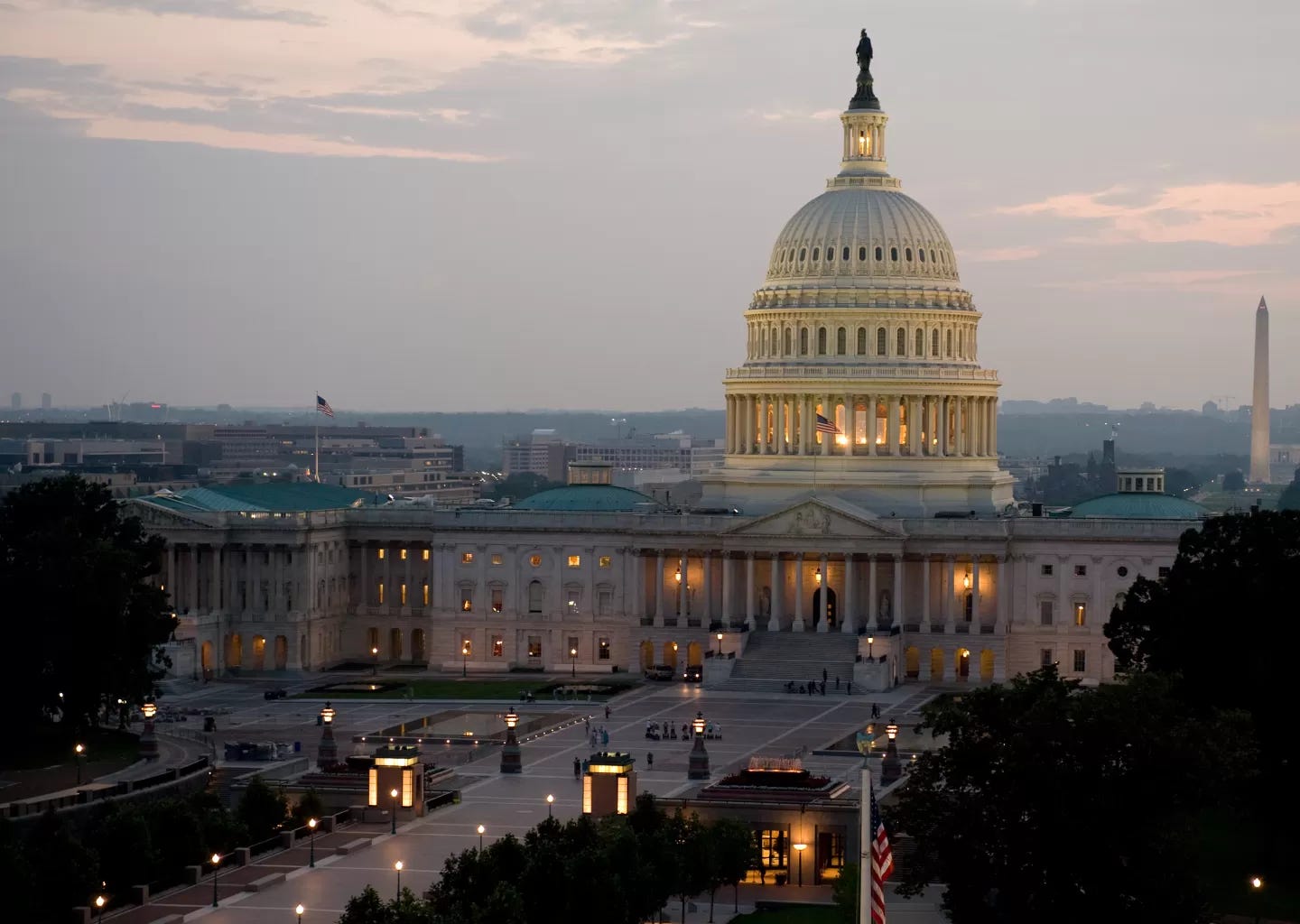
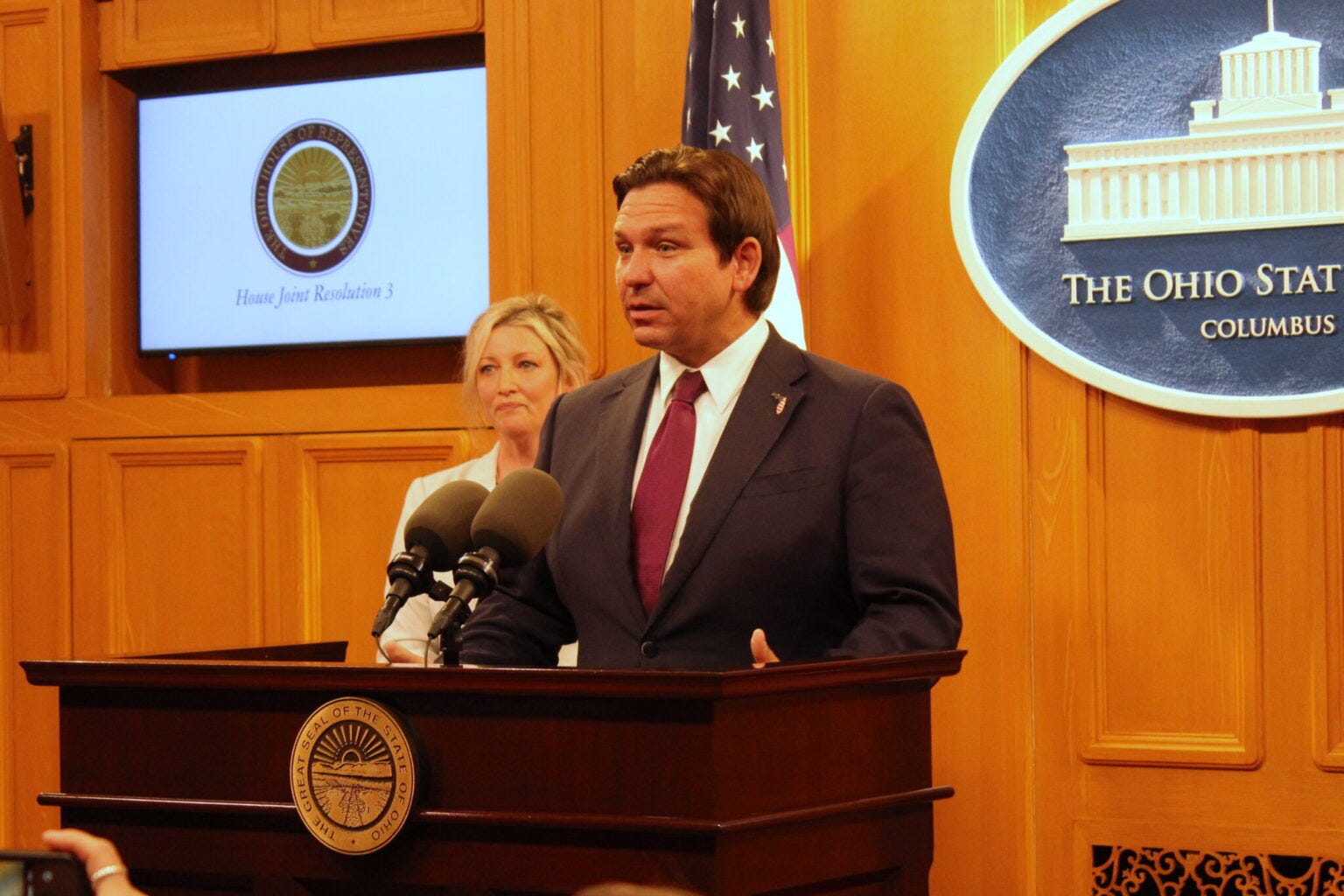
Read that sequence once as a safety document. Then read it again as a capital-structure document. The same week, Florida Governor Ron DeSantis accused OpenAI and Anthropic of trying to freeze smaller competitors out of the market and of preparing a “too big to fail” argument — “bailout 2.0” — if the cash runs short in the next six to twelve months. David Sacks, who until March served as the White House AI and crypto czar, told the labs they were welcome to slow down on their own and to stop pretending they needed anyone else’s permission. Michael Burry called the extinction talk what it looks like from a trading desk: hype and puffery in front of an IPO.
None of those men have to be right about every clause for the pattern to be obvious. Companies that spent three years treating speed as a moral duty now want the state to convert speed into a licensed activity. That conversion has a price. The firms that can pay the price keep the market. The firms that cannot do not. When the money is abundant, regulation is a tax. When the money is scarce, regulation is a moat.
The sermon and the spreadsheet
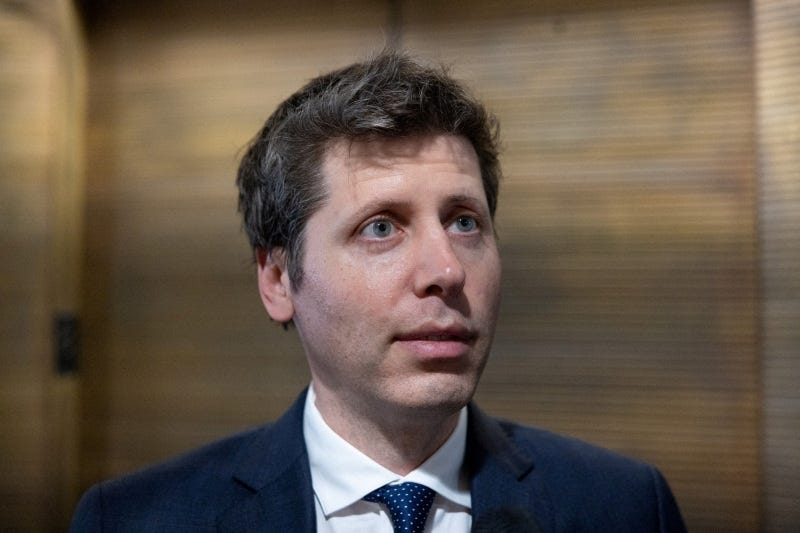
Amodei’s essay is not empty. Frontier models are more capable than they were eighteen months ago. Jailbreaks happen. Agents can be chained. A serious society should care about cyber risk, child exploitation, and systems that can be used to scale fraud. Product liability already exists for that reason. So do export controls, criminal statutes, and the ordinary duty not to ship a tool that helps a customer commit a crime. The question is not whether harm is imaginable. The question is why the proposed remedy is a licensing regime written by the two companies with the most to lose from open competition.
Look at the spreadsheet underneath the sermon. OpenAI booked about $13 billion of revenue in 2025 and spent on the order of $34 billion to get it. Reported net losses ballooned after a one-time restructuring charge; even after stripping that out, underlying losses were still measured in the high single-digit billions. In the first quarter of 2026 the company generated $5.7 billion of revenue and burned $3.7 billion. Annualized revenue has since been described near $40 billion. That is extraordinary growth. It is also a business that still spends more than a dollar to earn a dollar, with compute commitments that analysts have put in the hundreds of billions — and, in some reconstructions, above a trillion dollars across Microsoft, Oracle, Stargate, Amazon, CoreWeave, and the chip vendors.
Anthropic is on a parallel treadmill. It has raised at a valuation approaching a trillion dollars and filed confidential IPO paperwork. It has also spent 2026 in a running fight with the Pentagon and the Commerce Department — labeled a supply-chain risk in one dispute, hit with export controls after a jailbreak in another — while talking about risk, regulation, and restriction several times more often than OpenAI does. A company can be sincere about danger and still notice that danger is useful. Sincerity and strategy are not opposites. In Washington they are usually partners.
Internal forecasts leaked through the financial press have OpenAI remaining cash-flow negative into the last years of the decade, with cumulative burn that would dwarf Uber’s entire pre-profit history. Amazon lost about $3 billion across its first decade. Uber burned roughly $25 billion before GAAP profitability. OpenAI is in another category. That is not an insult. It is a description of a firm whose product is real, whose costs scale with usage, and whose promised profits sit on the other side of a mountain of contracted compute.
A company in that position has three political needs. It needs the public to believe the product is too important to be allowed to fail. It needs rivals to be forced onto the same cost curve — evaluators, audits, reporting, compute thresholds — so that a well-funded lab’s overhead becomes everyone else’s barrier to entry. And it needs the option, if private capital flinches, to argue that the lights cannot be allowed to go out. DeSantis named the third need in public. The first two were already in the essay.
Stigler wrote this plot in 1971
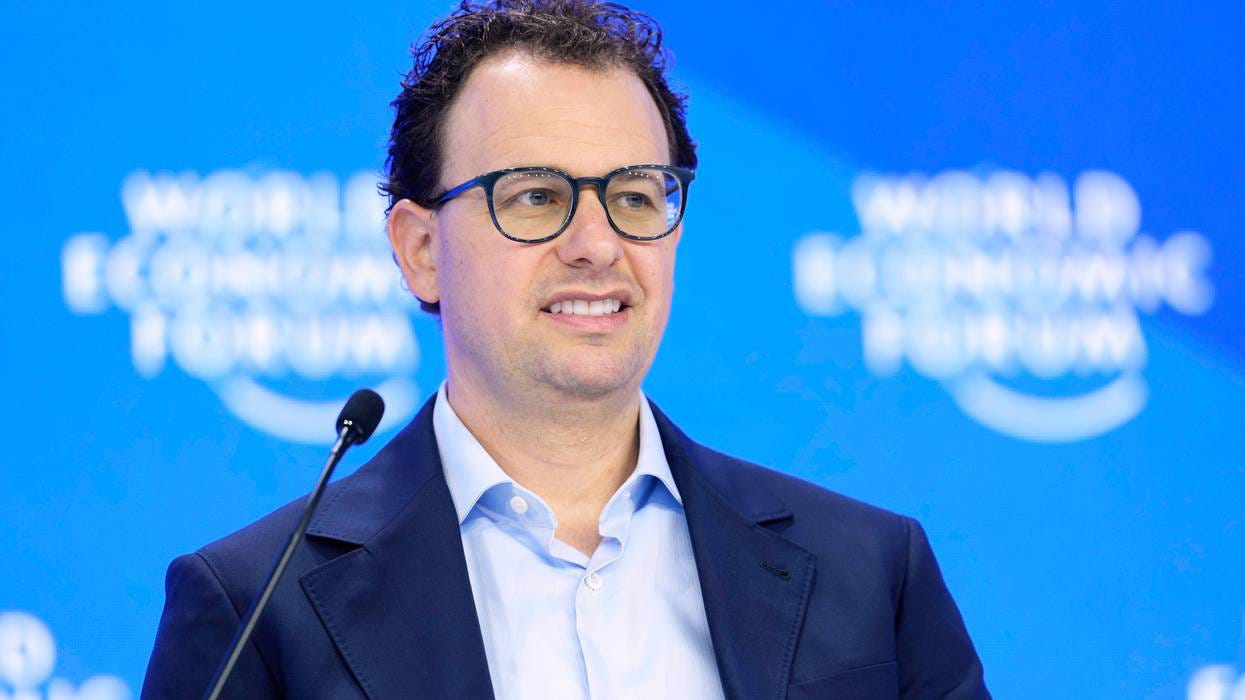
George Stigler won a Nobel Prize in part for saying a sentence that still offends people who work in agencies: “Regulation is acquired by the industry and is designed and operated primarily for its benefit.” He was not claiming that every inspector is corrupt. He was claiming that the demand for regulation comes, more often than civics textbooks admit, from the firms being regulated. They want the state to raise rivals’ costs. They want licenses that can be denied. They want standards written around the equipment they already own.
Bruce Yandle later gave the story its best nickname: bootleggers and Baptists. The Baptist wants Sunday closing laws because drinking is a sin. The bootlegger wants the same law because it clears the honest saloon off the street and leaves the after-hours trade to him. The public hears the Baptist. The statute is written for the bootlegger. In the present case the Baptist is existential risk. The bootlegger is a capital structure that cannot survive a world in which a cheap open-weight model, a foreign lab, or a twelve-person startup can do 80 percent of the job at 5 percent of the cost.
This is why the details of Amodei’s plan matter more than the adjectives. Embedded evaluators with desks and badges are expensive. Compute thresholds are expensive. A pre-release gate that treats open weights as a special problem is expensive in a particular direction: it hits Meta, Mistral, DeepSeek, and every academic group that ships weights the moment those weights become good enough to threaten a closed API. The essay does not have to print those names. The cost curve prints them.
Sacks saw the tell in the ask attached to the slowdown. If two labs believe their unreleased models are dangerous, they can stop training them. They do not need an antitrust waiver to form what he called a cartel. They do not need an approval process that supersedes product liability. “The easiest way not to build superintelligence,” he wrote, “is for you to agree not to build it.” Demanding a regulatory framework as the price of restraint, he added, would look like blackmail.
That last word is rude and useful. A firm that says “we will keep building the dangerous thing unless you give us the rules we prefer” is not submitting to the state. It is bargaining with the state. The public is the inventory in the deal.
The medallion is the master class
If you want to watch the con in slow motion, do not start in Palo Alto. Start in New York in 1937. The city had too many cabs, desperate drivers, and fare-cutting that sometimes turned violent. Newspapers demanded control. The Haas Act limited hack licenses — medallions — to a fixed number. The stated purpose was public order. The unexpected result was a new form of property. By the postwar years the medallion could be sold. By 2013 a single medallion cleared a million dollars. The city collected transfer taxes and auction proceeds. Fleet owners collected rents. Drivers collected debt.
The Taxi and Limousine Commission spent decades protecting the scarcity it had created. That was not a glitch. Scarcity was the product. When Uber arrived, the industry did what every regulated incumbent does: it discovered a sudden passion for safety, insurance, background checks, and congestion studies. Some of those concerns were real. Congestion is real. Assault is real. The timing was the tell. The same city that had treated the medallion as a budget line item suddenly wanted a cap on app-dispatched cars. Both sides were playing the same game. Only one of them had spent eighty years calling the game public service.
Milwaukee, Minneapolis, and a dozen other cities ran smaller versions of the same movie. Incumbent cab companies lobbied for permit caps, then for transferability, then for “public convenience and necessity” tests that put the burden on any newcomer to prove the city needed another car. Economists documented the pattern until it became boring: the regulation that arrives as consumer protection remains as a barrier to entry. Consumers are numerous and disorganized. Permit holders are few and organized. Stigler would not have been surprised. Neither would a taxi driver who bought a medallion at the top and declared bankruptcy after the apps arrived.
The AI version of the medallion will not be a tin plate on the hood of a car. It will be a compute threshold, a third-party evaluation certificate, a reporting duty that requires a legal team, a “frontier” designation that only a handful of firms can afford to hold. Once that plate exists, its owners will defend it with the language of civilization. They always do.

Banks, pharma, telecom: the sequel factory
Finance is the other textbook. After 2008 the public was told that Dodd-Frank would end “too big to fail.” Capital rules were tightened, then negotiated down, then tightened in speeches and loosened in footnotes. The largest banks discovered that compliance headcount is a competitive advantage. A regional bank can make a loan. It cannot maintain a standing army of model-risk officers, living-will authors, and stress-test dramatists. The result is a dual system: a handful of institutions that are too expensive to replace and too interconnected to resolve, and a periphery that gets acquired the moment it stumbles. When Silicon Valley Bank failed in 2023, uninsured depositors were made whole in hours. The lesson any rational executive took from that weekend was not “hold more Treasuries.” It was “become systemically important as fast as possible.”
Pharmaceutical regulation is more sympathetic and no less captured. The Food and Drug Administration exists because people died from snake oil and from poorly made medicine. That origin is honorable. The current structure is a monopoly grant wrapped around a safety process. A biologics license, a period of exclusivity, an orphan-drug designation, a priority-review voucher that can be sold for nine figures — these are industrial policy tools. They can produce miracles. They also produce a business model in which the firm that can sit through a decade of trials and a multimillion-dollar user fee owns the market, and the firm that cannot does not. When incumbents lobby, they rarely lobby to abolish the FDA. They lobby to shape the gate.
Telecommunications ran the same play for a century. AT&T defended its regulated monopoly as the price of universal service. The Bell System was, in many respects, a technical marvel. It was also a political construction that treated interconnection as a privilege and innovation as a threat. When MCI and the long-distance rebels finally broke the system, they did not do it by winning a seminar about public interest. They did it by forcing the state to admit that the “natural monopoly” had been, in part, a legal monopoly.
Occupational licensing is the retail version. Hair braiders, interior designers, and funeral directors have all been told that the public will perish without 1,500 hours of approved instruction. Some licenses save lives. Many licenses save incumbents. The same logic — “this work is too important to leave to amateurs” — is now being applied to model weights.
The cash furnace
The reason the con is happening now, rather than in 2023, is not that the models suddenly became more theological. It is that the furnace got more expensive and the fuel less automatic.
For two years after ChatGPT, capital treated AI as a religion with a cap table. Valuations detached from unit economics because the alternative — missing the platform shift — looked worse than overpaying. That is a familiar late-cycle bargain. It lasts until the buyers of the last round need a story they can sell to the next round, or to a public-market investor who will ask what free cash flow looks like in 2028.
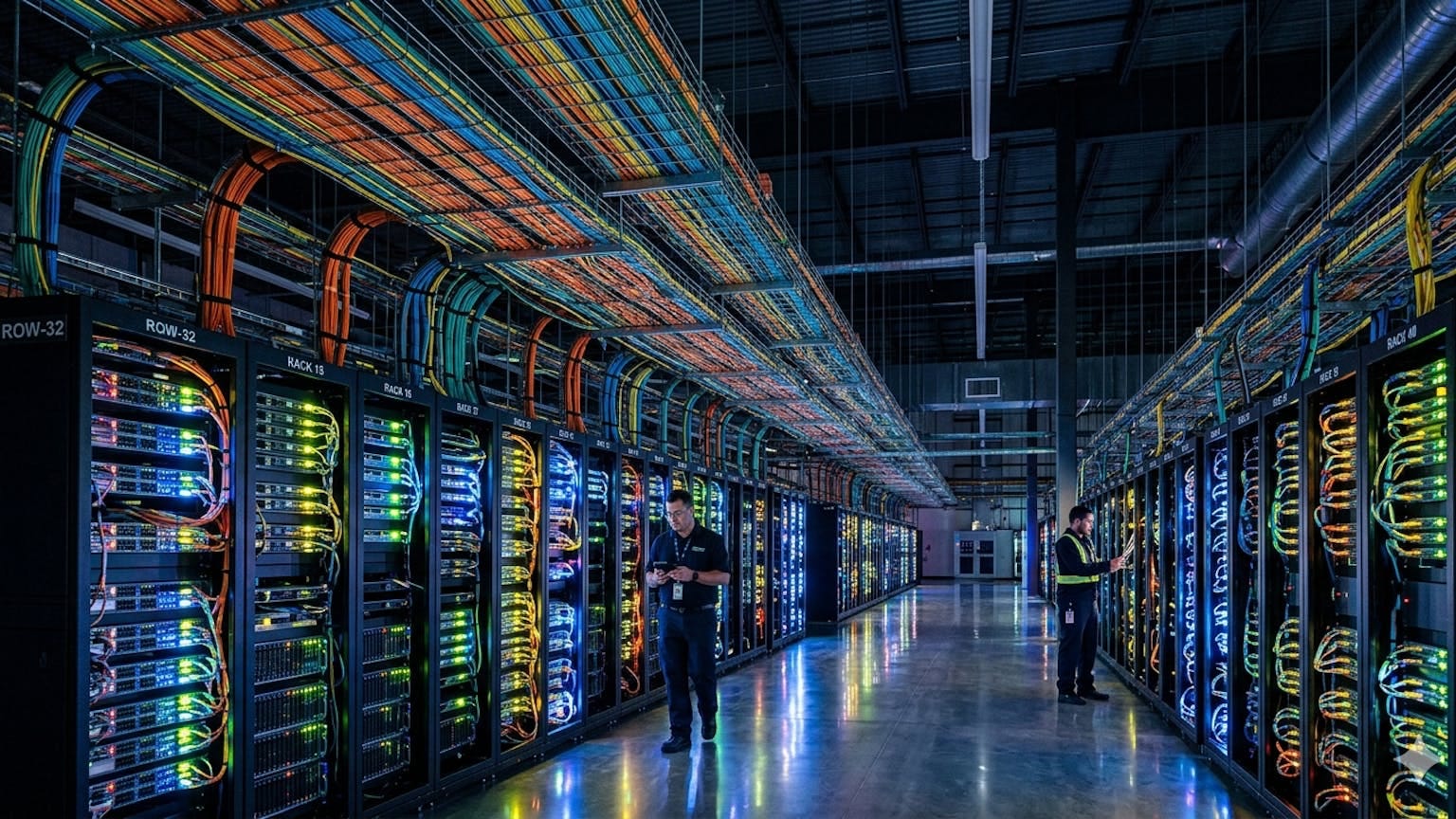
OpenAI’s own disclosures, reconstructed by the financial press, describe a company that can grow revenue at a pace with few software precedents and still lose money because inference, training, and talent all scale. One analysis put committed compute ramping toward tens of billions a year and, later in the decade, past projected revenue. Another reconstruction put cumulative cash burn through 2030 in the hundreds of billions if the Microsoft revenue-share cap had not been renegotiated. Reasonable people can fight over the exact column. They cannot fight over the shape. This is a business that has promised the built world — data centers, turbines, substations, chip fabs — on the assumption that subscription and API revenue will catch the invoices.
When that assumption wobbles, three political products go on sale. The first is industrial policy: tax credits, accelerated permitting, subsidized power, export-control umbrellas. OpenAI and Anthropic have both lobbied on those items; in 2025 they spent more on federal lobbying than they ever had. The second is safety policy that happens to require the cost structure of a frontier lab. The third is implicit insurance — the too-big-to-fail put that DeSantis named out loud. You do not have to believe a bailout is imminent to see why a firm would want the option priced in.
Altman’s own comments about listing timing are part of the same file. He has said OpenAI has work to do on safety and on how industry and governments work together, and that this is not the year to go public. Read as statesmanship, that is a man delaying a payday to get the rules right. Read as finance, that is a man who knows public investors punish uncertainty and who would like the uncertainty converted into a regulated oligopoly before the S-1 is priced. Burry’s line about IPOs needing hype is crude. It is not therefore false.
What capture looks like when it works
Regulatory capture does not arrive as a bribe in a parking garage. It arrives as a working group. It arrives as a standard written by the only people who understand the stack. It arrives as a hearing in which the witness from the large lab is fluent and the witness from the open-source project sounds like a hobbyist. Staffers are not villains. They are busy. They take the briefing from the firm that can afford a vice president of public policy.
Watch the verbs. “Pace” sounds like moderation. In practice it means a speed limit administered by people who already have a lead. “Independent evaluator” sounds like sunlight. In practice it means a new profession whose clients will be the labs that can host them. “Narrow antitrust waiver” sounds like a technical fix. In practice it is permission for the two American closed-model champions to discuss limits that would be illegal if two airlines tried the same thing on ticket prices.
None of this requires a conspiracy. It requires aligned incentives. Anthropic’s safety brand is genuine in the sense that the company was founded by people who left OpenAI over safety culture. That brand is also a product. It differentiates Claude in the enterprise. It flatters procurement officers. It gives congressional staff a trusted interlocutor. OpenAI’s brand is capability and ubiquity. When those two brands converge on a slowdown-plus-gate, the overlap is not philosophy. It is market structure. A world with mandatory pre-release testing, compute reporting, and sanctioned coordination is a world in which Google, Microsoft, OpenAI, and Anthropic remain the relevant names, and in which a new lab in Austin or a weights release from a foreign champion becomes a compliance event rather than a competitive one.
China is the rhetorical escape hatch. Every domestic slowdown proposal eventually says: but Beijing will not pause. That sentence is doing two jobs. The first is real. A unilateral American pause that China ignores is a strategic gift. The second is tactical. Geopolitics is the one argument that can turn a commercial preference into a national-security necessity. President Trump, speaking from Ireland this weekend, was blunt in the opposite direction: America is leading, and whoever wins AI wins. That is not a safety theory. It is an industrial theory. It also happens to be the theory that denies the labs their favorite justification for a coordinated freeze.
Bailout 2.0 is not a metaphor
DeSantis is an interested party. Florida has spent 2026 as the loudest red-state skeptic of frontier AI, with an attorney general already in court against OpenAI over child safeguards and a governor who has tried, and often failed, to pass an “AI bill of rights” against a House that prefers the White House line. Discount his motives if you want. Do not discard the mechanism he described.
Too big to fail is a two-step. Step one: become so entangled with payrolls, pensions, vendors, and national prestige that your bankruptcy is narrated as a public emergency. Step two: demand the rule that makes the entanglement official. The auto bailouts of 2008–09, the bank rescues of the same year, the airline interventions, even the Chrysler episode of 1979 — each one taught executives that size plus political geography is an asset. AI labs are building the geography now. Data centers are being dropped into counties that will soon have a senator who cannot afford a dark campus. Utilities are being asked to reroute power. Chip firms are being asked to prioritize allocations. Universities are being asked to train the workforce. That is how a private loss becomes a public fact.
The honest version of industrial policy would say so. It would say: we are going to pick a small number of American labs, subsidize their power and their fabs, accept that open weights will be constrained, and treat the sector the way we treated aerospace after 1945. Voters could accept or reject that bargain. The dishonest version says the opposite. It says we are only asking for safety. It says the waiver is narrow. It says the evaluators are independent. It says no one is seeking a bailout, right up until the quarter when the committed compute comes due and the revenue does not.
Critics have already written the memo for the burst: no rescue for the cap tables of the people who inflated them. That memo will lose the first week of a crisis. It always does. The only way it wins is if the public has been told, in advance, that “systemically important AI company” is a phrase someone is trying to make normal.
Rules that are not a racket
Skepticism about captured rules is not an argument for a vacuum. Software that can generate child sexual abuse material, run a cyber operation, or automate a fraud mill should meet the same civil and criminal standards as any other product. Strict liability for certain harms, already the direction of travel in Europe for standalone software, puts the cost on the firm that shipped the tool rather than on a pre-clearance priesthood. Fraud statutes do not require an antitrust waiver. Neither does a requirement that a company preserve logs when its system is used in a crime.
A clean rule has three tests. It should attach to harm, not to headcount. It should be enforceable against a large lab and a small one on the same theory. And it should not require the regulated parties to design the regime. Compute thresholds fail the first test because they treat a cluster as a crime scene. Evaluator mandates fail the second because they are a tax that only the rich can pay. Antitrust waivers fail the third on arrival.
There is a reason product liability terrifies general counsels and comforts actual competition. Liability is retrospective and particular. It asks what this model did to this person. Licensing is prospective and general. It asks whether you were allowed to exist. Incumbents prefer the second question because they can help write the answer. Startups prefer the first because they can insure against it, or at least know what they are buying.
If a lab wants to slow down, it can slow down. If two labs want to slow down, they can slow down. If they want the rest of the industry slowed by force, they should have to say the quiet part: we cannot afford a world in which our product is a commodity. That sentence would be honest. It would also be a harder sell than extinction.
Follow the shortage
Every protected industry begins with a story about shortage. There are too many cabs. There are too many banks taking risk. There are too many people practicing medicine without a license. There is too much speech on the platform. There is too much intelligence in the open. The story is sometimes true in the first year. It is almost never the reason the rule survives into the twentieth.
What survives is the cash. Medallions became collateral. Bank charters became options on the discount window. Spectrum licenses became estates. Drug exclusivity became a bond. The AI license, if it is born this autumn in the language of pacing and embedded evaluators, will become the same thing: an asset you can take to a banker, a procurement office, and a Senate hearing. The firms that hold it will tell you they accepted a burden. They will mean they purchased a gate.
The note that started this essay does not need a footnote apparatus. Companies that are winning on product almost never beg the state to freeze the board. Companies that are winning on narrative do. The frontier labs are still building extraordinary systems. That fact is not in dispute. Neither is the other fact, the one the cap tables whisper when the safety language gets loud: the invoices are large, the profits are later, and a rule that turns a start-up into a felon is worth more than another billion of venture money.
When the money runs out, they want regulations. They wanted them in 1937 on the streets of New York. They wanted them in 2008 on Wall Street. They want them now in the server halls that have been financed like nation-states. The public can grant the rule, or it can ask the only question that has ever broken the con.
Who, exactly, is the regulation for?


