

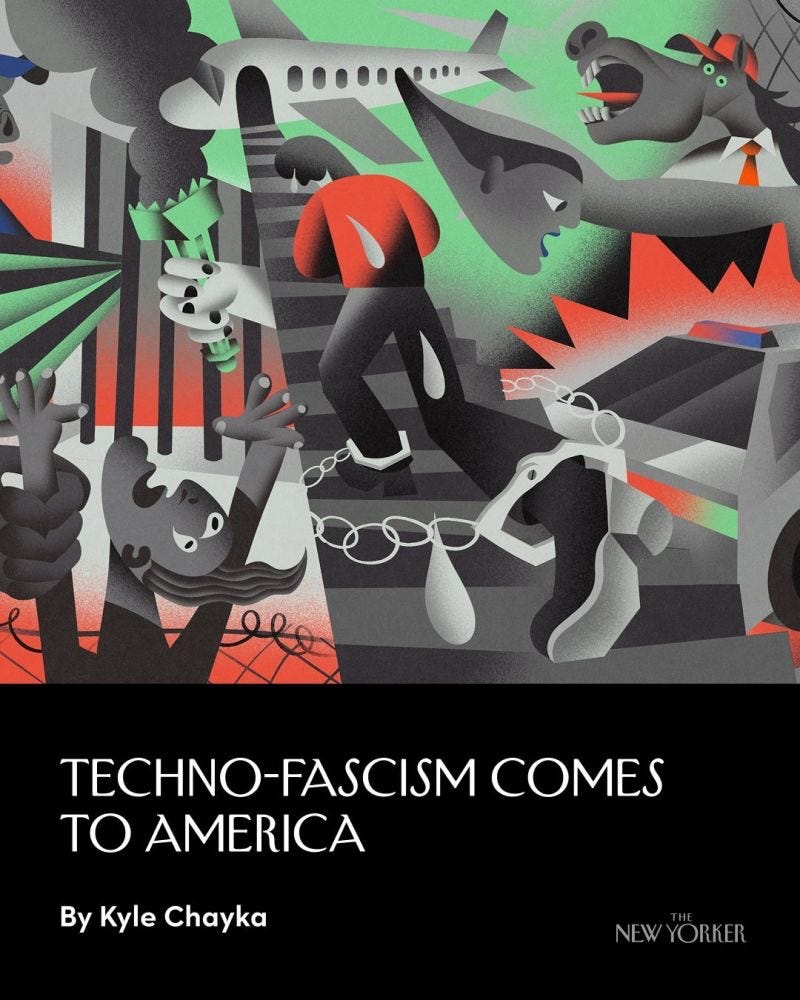
The sentence is short because the fact is not complicated.
Money has made the billionaires into fascists.
Not “somewhat conservative.” Not “eccentric libertarians.” Not “disruptors.” The scale of their wealth has produced a political type that is old, recognizable, and dangerous: a class that no longer believes it must share a common world with the people who produce its fortunes, and that is willing to smash the institutions that once forced it to pretend otherwise.
This is not a metaphor. It is a description of what extreme concentration of capital does to the people who hold it.
Naomi Klein put the mechanism cleanly this month: extreme wealth has a deranging effect. It turns you into a supremacist. The money is not merely adjacent to the politics. The money is making them fascist.
That is the entire argument. The rest is evidence.
The Pattern Is Not New
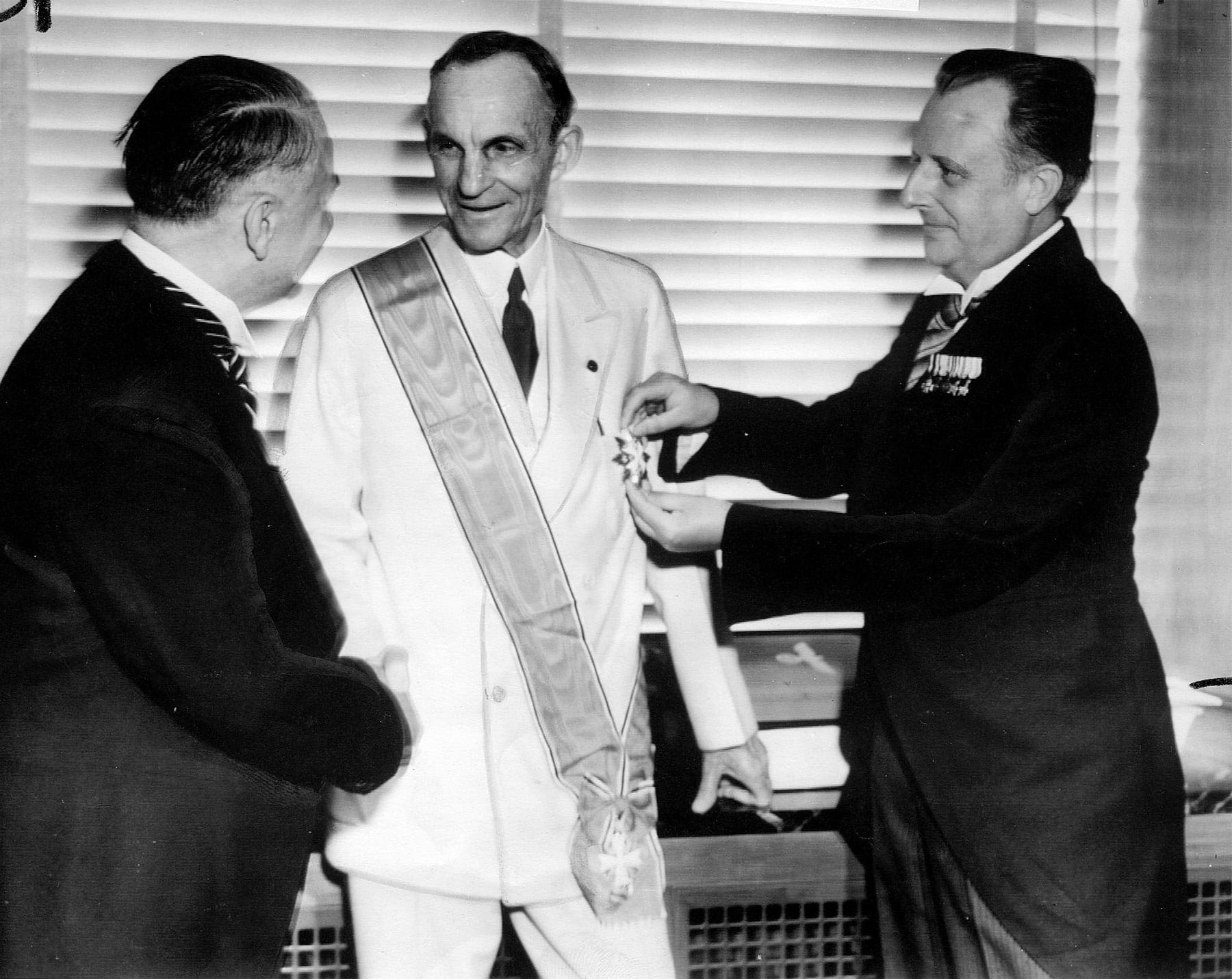
In July 1938, on his seventy-fifth birthday, Henry Ford stood in Dearborn, Michigan, while two German diplomats pinned the Grand Cross of the Supreme Order of the German Eagle to his white suit. It was the highest honor Nazi Germany could give a foreigner. Hitler had designed it. Ford was the first American to receive it.
Hitler kept a life-size portrait of Ford behind his desk. In Mein Kampf he named Ford as the one great American who had remained independent of “the Jews.” He told a Detroit reporter that Ford was his inspiration. Ford’s The International Jew circulated in German translation. Baldur von Schirach later testified at Nuremberg that Ford’s writings had helped form his antisemitism.
Ford denied sympathy with Nazism while accepting the medal. He later built bombers for the Allies. The sequence is familiar: first the ideology that flatters the industrialist, then the award, then the retrospective claim that it was all a misunderstanding.
The industrialists of the 1920s and 1930s did not become fascists because they read Gentile or Gentile. They became fascists because democracy, unions, and taxation threatened the scale of their power, and fascism offered a story in which the strong were entitled to rule the weak, the factory was a model of the state, and the “mob” was a biological problem rather than a political constituency.
Krupp, Thyssen, IG Farben, Fiat, and a roster of American firms that did business with the Reich followed the same logic. Profit first. Hierarchy as natural law. The nation as a firm. The surplus population as a cost.
The names change. The structure does not.
How the Money Came Back
The postwar settlement—high marginal tax rates, strong unions, antitrust, capital controls—was not charity. It was a political decision that the alternative had just killed tens of millions of people. For a generation, the very rich were rich, but they were not sovereign.
That settlement was dismantled on purpose.
Citizens United and the dark-money architecture that followed it did not merely “increase speech.” They legalized the purchase of the referees. In the 2024 cycle, a handful of billionaire families spent billions on federal races—orders of magnitude more than before the Court opened the floodgates. The money did not buy abstract “influence.” It bought policy: tax codes, regulatory demolition, judicial appointments, and a politics that treats the state as a protection racket for capital.
Once you can buy the state, you no longer need to persuade the public. You need only to manage it—or to declare that the public is the problem.
That is the hinge. When wealth reaches a certain scale, democracy stops looking like a system of self-government and starts looking like an expropriation risk. The franchise becomes a threat. The welfare state becomes a theft. Climate policy becomes an attack on asset values. Antitrust becomes persecution. Taxation becomes violence.
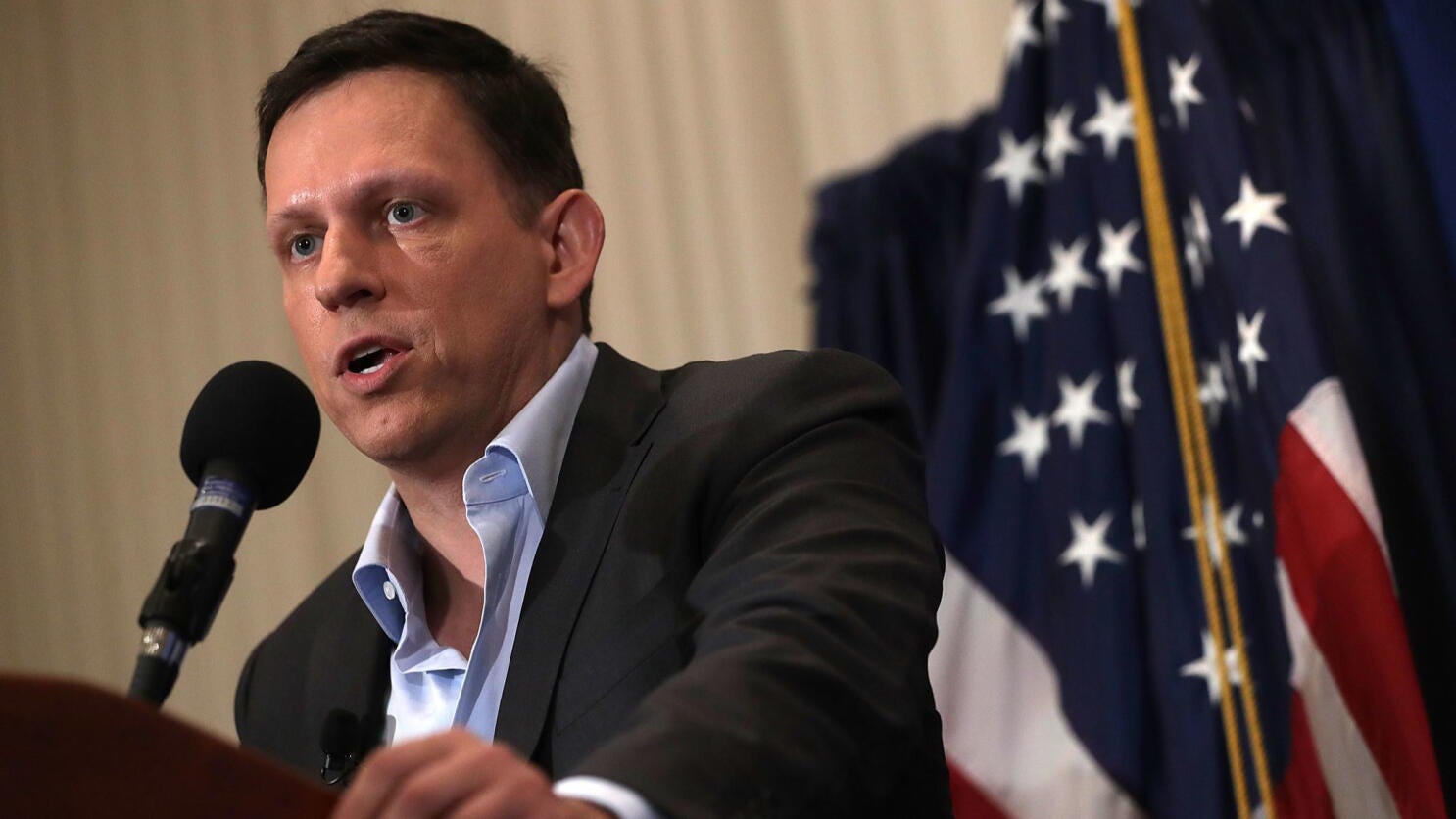
Peter Thiel said the quiet part in 2009, in an essay for the Cato Institute: “I no longer believe that freedom and democracy are compatible.” He blamed the expansion of the franchise to women and the growth of welfare beneficiaries. He pointed toward cyberspace, seasteading, and outer space as escapes from “the unthinking demos.”
That is not libertarianism in the textbook sense. It is a declaration that the majority is an obstacle to the freedom of the few. Call it what it is.
The Tech Oligarchs and the New Court
The current crop did not invent this. They industrialized it.
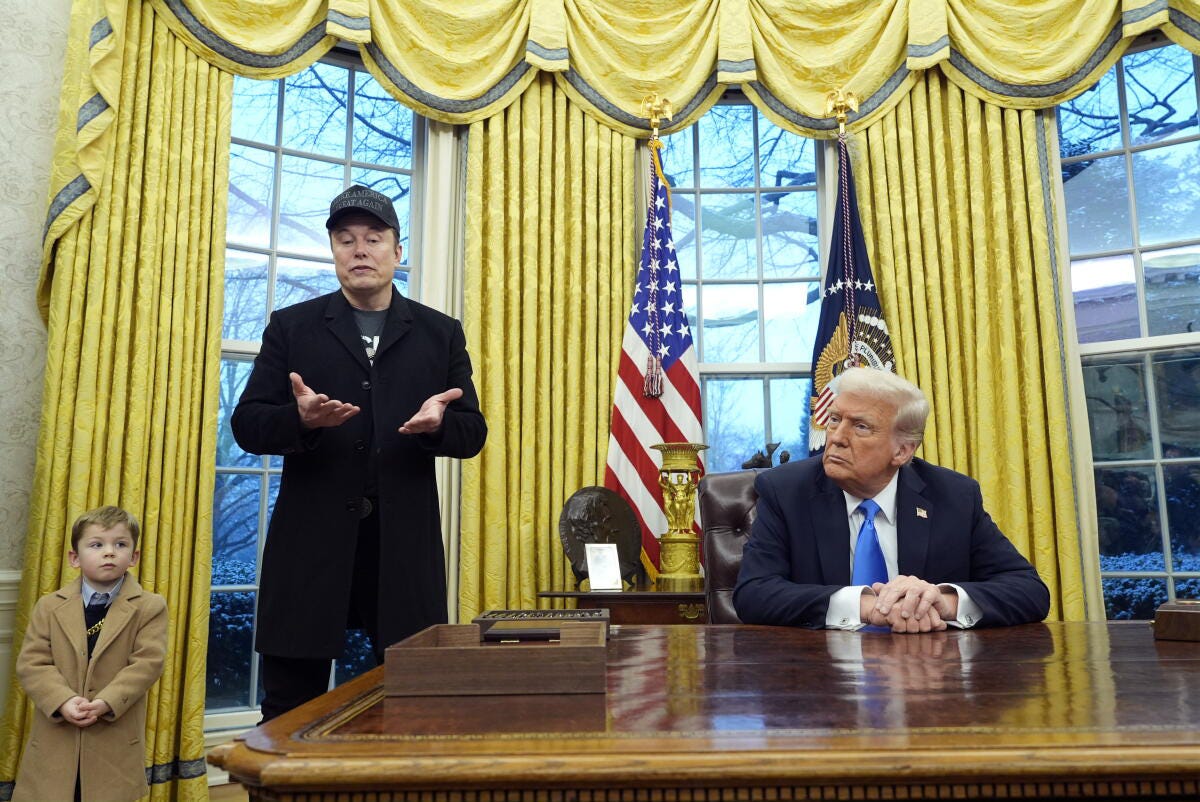
Elon Musk did not spend hundreds of millions on a presidential campaign because he suddenly discovered a passion for civic virtue. He bought a communications platform, turned it into a political weapon, and then purchased proximity to the state that regulates his companies, awards his contracts, and can protect or punish his interests. The photo of Musk in the Oval Office is not a curiosity. It is the merger of platform power, state power, and personal fortune in a single frame.
Jeff Bezos, Mark Zuckerberg, and Larry Ellison did not line up for inauguration seats as a hobby. Media, cloud, data, and defense contracts are the commanding heights of the present. Whoever owns the pipes owns the permission structure. Ellison’s acquisition trail through entertainment and news is not a side project. It is the old Hearst move at cloud scale: if you own the story, you own the limits of what the public is allowed to know.
Palantir does not sell software. It sells the capacity to see, sort, and act on populations. That is a state function. When the company that builds it is controlled by a man who has already written that democracy and freedom are incompatible, the product is not neutral.
The ideology that travels with this money is not “innovation.” It is exit. If the planet is becoming unlivable, leave it. If the city is becoming ungovernable, bunker it. If the electorate is becoming ungrateful, replace it with a founder-CEO model of politics. If Gaza is a ruin, reimagine it as a waterfront concession.
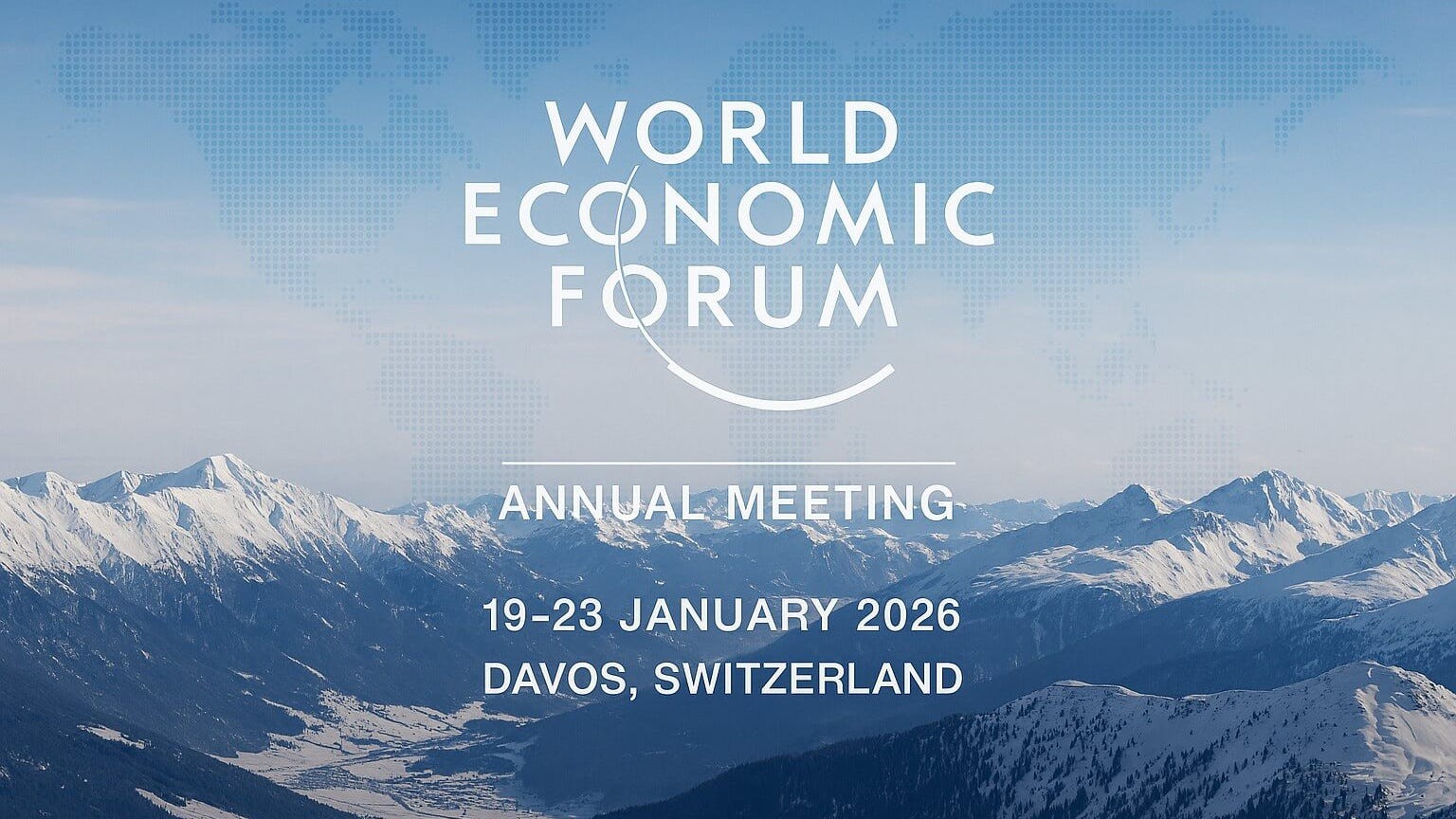
That last one is not a fever dream. At Davos in 2026, Jared Kushner and Steve Witkoff discussed “New Gaza” as a paradise city—gated, rich, cleansed of the inconvenient dead. Klein and Astra Taylor open their book on that scene for a reason. The World Economic Forum has always been a place where the rich describe their philanthropy. This year it was a place where they discussed the real-estate possibilities of a mass grave.
That is fascism with a term sheet.
End Times as Business Model
Klein and Taylor call the formation “end times fascism”: an alliance of religious fundamentalists who read catastrophe as prophecy, ethnonationalists who read catastrophe as a border, and tech oligarchs who read catastrophe as a market. They are not trying to prevent the end of the world as we know it. They are positioning to survive it, and to rule whatever is left.
The bunkers are not a punchline. They are a political theory. A $50 million underground compound designed to look like it is not a bunker is a statement about who counts when the systems fail. New Zealand estates, Argentine “freedom” invitations, Miami “Billionaire Bunker” enclaves, Mars fantasies—these are not eccentric hobbies. They are the architecture of a class that has stopped planning for a shared future.
Space is the cleanest version of the story. You do not have to share oxygen with people who vote. You do not have to pay for their hospitals. You do not have to look at what your supply chains did to their coastlines. The rocket is a moral technology: it converts abandonment into vision.
On Earth the same logic looks like borders, internment, famine as a policy tool, and the casual language of “human capital” and “useless eaters” recycled through dashboards and AI slide decks. The poor must be tracked. The migrant must be deterred. The surplus population of a warming world must be contained so that asset prices can be defended.
Fascism has always been a story about whose lives are disposable. The new version adds a spreadsheet and a launch window.
Gaza Is Not a Side Issue
If you want to see the ideology without the TED Talk polish, look at Gaza.
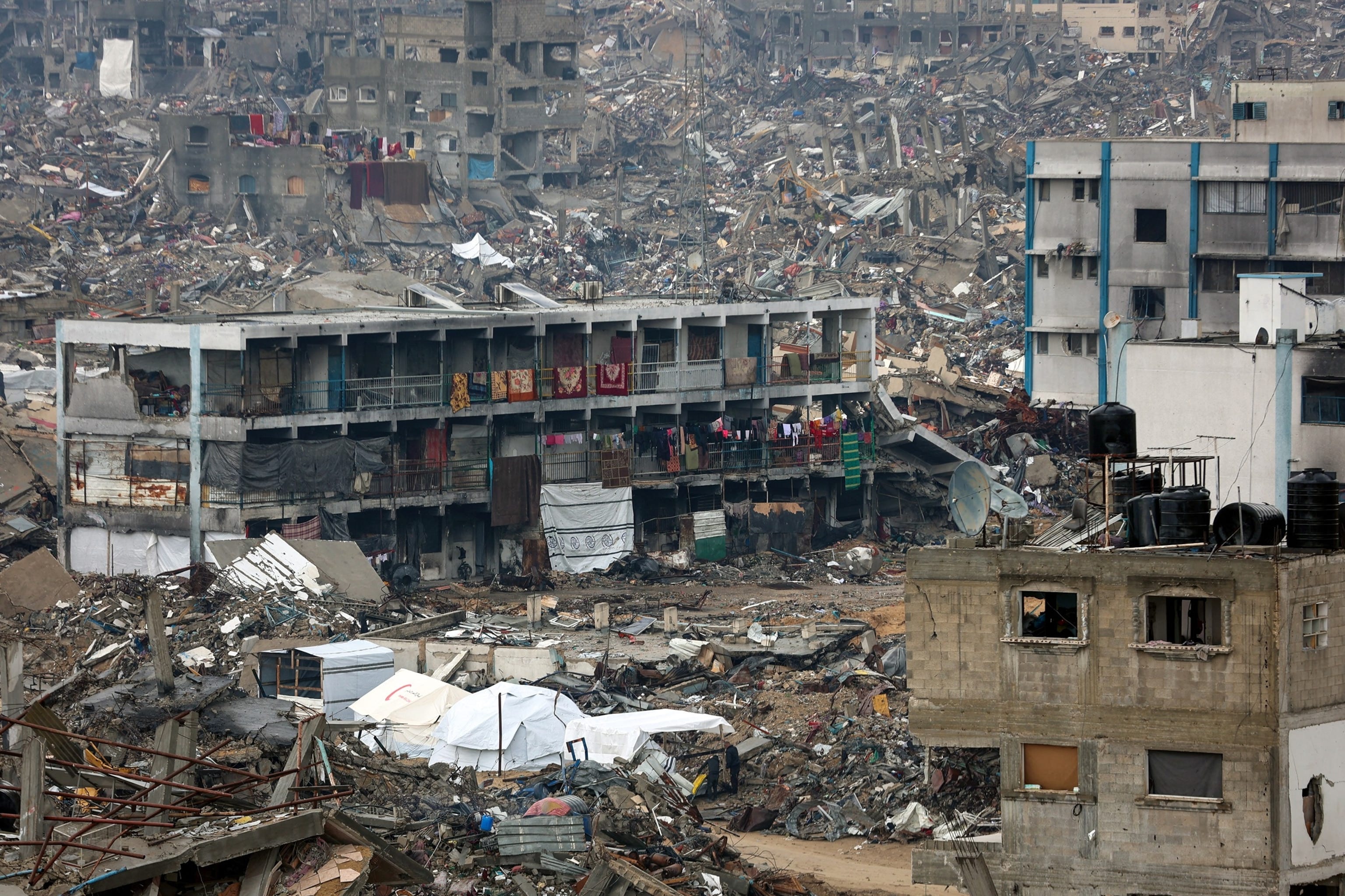
A population under blockade, starved, bombed, and then offered as a reconstruction opportunity for the same networks that underwrote the politics that made the destruction possible. Corporate media spent two years manufacturing consent for mass death and then discovered, on schedule, that the images were “complicated.” Hasbara budgets, junkets, Google contracts to deny famine, the weaponization of “radical Islam” as Israel’s “best tactic” in leaked PR research—this is not a conspiracy in the fever-dream sense. It is an industry.
Billionaire-owned platforms and billionaire-owned newsrooms set the bounds of the sayable. Critics are antisemitic. Dead children are human shields. Starvation is a Hamas talking point. The people who write the checks for the politicians who arm the operation also own the channels that explain why you should not look too closely.
This is the same money that lectures the world about rules, democracy, and women’s rights while treating an entire people as a demolition site with a view.
The cruelty is not a bug. It is a demonstration. If you can normalize this, you can normalize the next one. Iran was already sold as a “little detour.” The language of the grift does not change. Fear sells weapons. Fear sells elections. Fear sells the story that some nations and some lives are structurally less real.
I have written before that Washington’s Iran policy is about money, not nukes. The same sentence applies here. The bombs are a business. The narrative is a business. The reconstruction will be a business. The people under the rubble are the externality.
What the Money Does to the Mind
You do not need a novel theory of psychology. Isolation plus impunity plus a court of flatterers will do it.
At a certain net worth, no one tells you no. Your failures are “iterations.” Your cruelty is “high agency.” Your tax avoidance is “efficiency.” Your political capture is “founder mode.” You fly over the consequences. You sleep in rooms that cost more than a village. You begin to experience other human beings as latency, regulation, or threat.
The old rich at least had to live in cities they could not entirely seal. The new rich can buy islands, platforms, private security, private law, and a private information environment. They can fund the politicians who defund the agencies that might constrain them. They can buy the newspapers that might investigate them. They can algorithmically bury the people who name them.
That is not freedom. That is a private sovereignty. And private sovereignty, when it seeks to become public law, is the definition of a fascist temptation: the fusion of corporate power and state power, the leader as CEO, the nation as a firm, the population as a workforce or a problem.
Mussolini’s formula was crude and accurate: everything within the state, nothing outside the state, nothing against the state. The updated version is everything within the portfolio. The flag is optional. The balance sheet is not.
Look at the policy wish list and stop pretending it is mysterious. Smash the administrative state. Smash unions. Smash universities that produce dissent. Smash climate rules that strand assets. Smash antitrust. Smash the idea that a journalist or a prosecutor can touch a donor. Replace law with loyalty tests. Replace citizenship with founder discretion.
That is not a culture war. It is class war conducted with the language of destiny.
The Historical Rhyme
Every era of extreme inequality produces a literature of natural hierarchy. Social Darwinism in the Gilded Age. Racial science in the 1930s. Today’s version arrives as IQ discourse, “civilizational” panic, Great Replacement talk, and the Silicon Valley habit of treating most humans as a rounding error in the takeoff to superintelligence.
The content varies. The function is identical: to explain why the few should not be accountable to the many.
Ford had The International Jew. The present has podcasts, venture-capital memos, and theological justifications for why some bloodlines and some passports are closer to God. The mechanism is the same. Find a population to blame. Call democracy a suicide pact. Offer order.
When the public begins to notice—when majorities say billionaires are a threat to democracy, when they favor wealth taxes, when they elect people who say billionaires should not exist—the response is not introspection. It is acceleration. More money into elections. More control of media. More talk of civilizational emergency. More bunkers.
They are not confused about how they look. They have decided that looking like this is cheaper than sharing.
Davos as Court
Davos is the court of a class that no longer needs a nation. The Alps, the security perimeter, the panels on “stakeholder capitalism” while the same people short the future of the stakeholders. The 2026 meeting’s Gaza real-estate conversation is only the most grotesque exhibit. The ordinary exhibits are enough: climate pledges from the owners of the emissions, diversity panels from the owners of the sweatshops, peace forums from the owners of the weapons.
The mountain is the point. Height is morality. Distance is wisdom. The people below are a dataset.
A politics that begins in that room will always discover that the poor are too many, the migrants are too close, the voters are too angry, and the planet is too small. The solutions will always be walls, weapons, and exits.
What Follows
None of this is fate. It is a choice being made in public, with receipts.
The counter is not a better billionaire. Philanthropy is not a political theory. A nicer oligarch is still an oligarch. The counter is the unglamorous work that every previous period of oligarchic overreach eventually required: tax the wealth, break the monopolies, take the platforms out of private political control, rebuild public institutions that can say no, and refuse the story that some lives are a rounding error.
Klein and Taylor end on the living world rather than the escape hatch for a reason. The fight is not to manage decline so that a few can lift off. It is to keep the only habitable planet we have from being treated as a write-off.
Money did not have to do this. Wealth at human scale does not automatically produce this politics. What produces it is wealth so large that the holder can no longer imagine being constrained by other people—and a legal order that lets that imagination become policy.
Ford took the medal. The present takes the state.
The sentence remains the same.
Money has made the billionaires into fascists.
The only question left is whether the rest of us still remember that we outnumber them.


