

The United States is entering a period in which the old assumptions of permanence no longer hold. Institutions that once commanded automatic respect are treated as closed shops. A thin layer of the population accounts for most of the spending that keeps the consumer economy running. Disruptions in the Persian Gulf have not yet fully arrived in American kitchens and factories, but the lag is shortening. When food, fuel, and work tighten at the same time, countries do not experience a normal downturn. They experience a test of whether anyone still believes the system is legitimate.
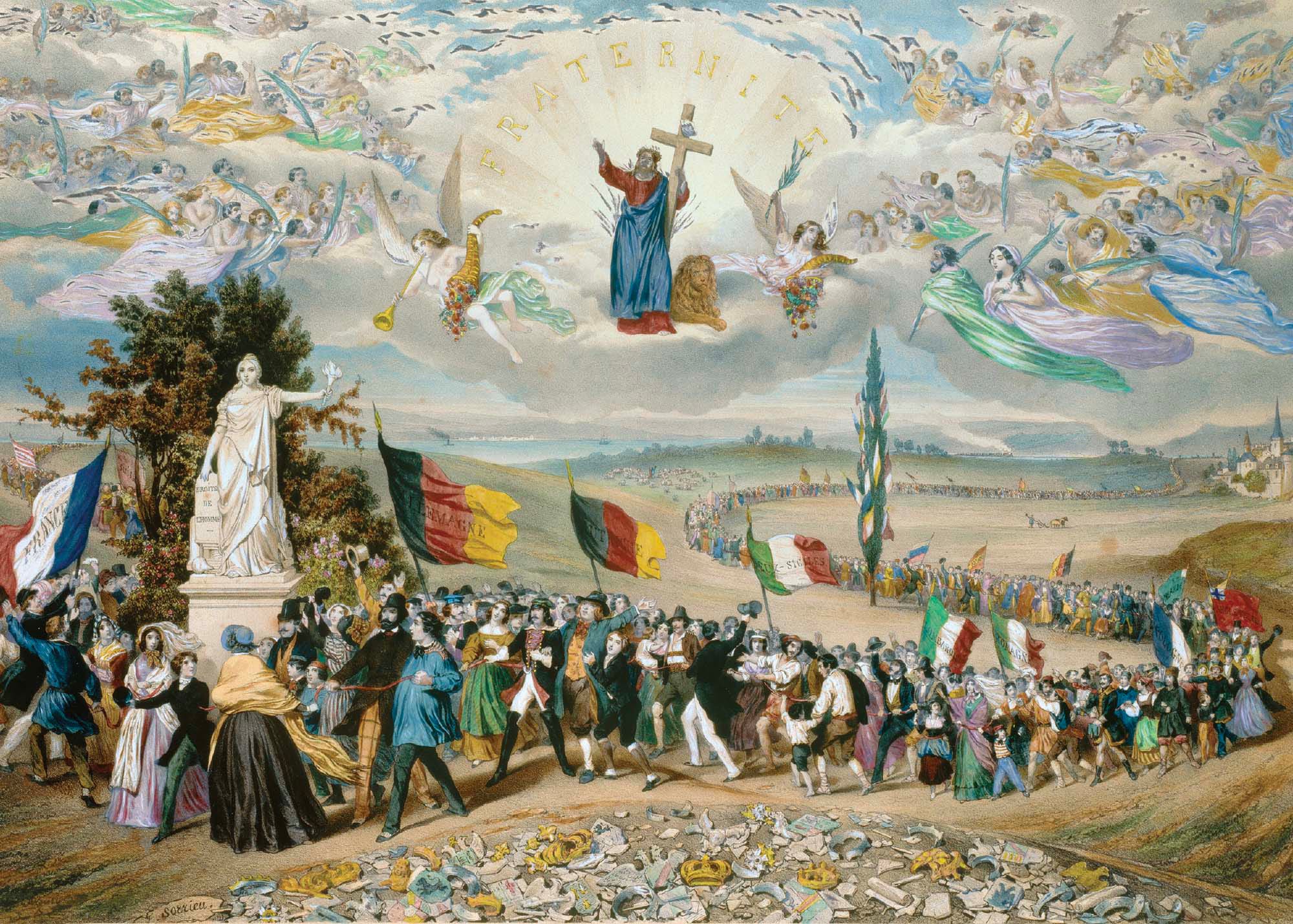
That test has a historical name: 1848. The point is not nostalgia for barricades. It is a warning about speed. Order looks eternal until the week it does not.
The Year the Map Shook
In 1848, revolt jumped borders faster than governments could explain it. Paris, the German states, the Italian peninsula, Vienna, Budapest, and the wider Habsburg world erupted in a single season. The demands varied—constitutions, national unification, cheaper bread, an end to police states—but the pattern was the same. Urban crowds and provincial movements decided that the promises of an earlier revolutionary age had been postponed long enough.
Most of those uprisings failed in the short term. Armies still obeyed. Dynasties still possessed a residue of sacred authority. The old order recovered its nerve and shot its way back into the palaces. That recovery is the part official history likes. The more useful part is what came before the recovery: the shock of discovering that millions of people had withdrawn consent at once.
The regimes of 1848 were still widely regarded as the rightful framework of society. That is why they could suppress the explosion and survive another generation. The comparison to the present is therefore not that street revolutions are inevitable. It is that the one asset those governments still had—legitimacy—is the asset now in shortest supply in the United States and much of Western Europe.
A government can endure lost wars, ugly scandals, and even hunger if the public still believes the system itself is the only legitimate arena for conflict. It cannot easily endure the moment when large numbers of people conclude that elections, courts, parties, and bureaucracies are a loop that produces the same result no matter who is nominally in charge. The sentence heard in kitchens and break rooms across America—that it no longer matters who you vote for—is not merely cynicism. It is a statement about consent. When consent goes, the remaining tools are coercion and patronage. Both are expensive. Both fail when the treasury and the barracks are themselves strained.
A Recipe, Not a Slogan
Economic structure turns political disgust into something more dangerous. A common way of putting the American imbalance is that roughly a tenth of the population accounts for the great bulk of spending inside the economy. Economists will argue over the exact cut of the data. The strategic meaning does not depend on a decimal point. A consumer society that looks prosperous because a narrow slice is still buying is a society that can appear healthy right up to the week the majority runs out of slack.
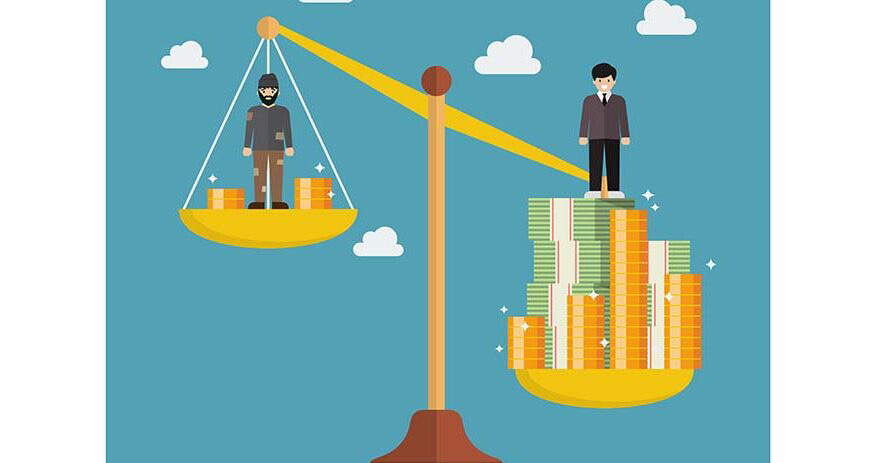
Inequality by itself does not produce revolt. The Gilded Age was unequal and did not end in a European-style revolution. Lost legitimacy by itself can produce apathy rather than barricades. The combustible combination is inequality plus a sudden material shock plus the belief that no official channel will fix either one.
The oldest formula in this literature is logistical, not ideological. Take away food. Take away fuel. Take away jobs. What remains is not a policy seminar. It is a survival problem. The line that every society is three meals from upheaval is usually hung on Lenin and sometimes on older sources. The attribution matters less than the mechanism. People will tolerate a great deal of corruption, foreign-policy failure, and cultural conflict if the stores are full and the commute still works. They will not extend the same patience to the same elites when the shelves thin and the paycheck no longer covers the tank of gas.
That is why the coming danger is better understood as a recipe than as a single villain. The ingredients are already on the counter. The question is whether a heat source arrives before anyone bothers to put them away.
The Blast on Delay
The heat source most likely to arrive is not a sudden invasion of the continental United States. It is the delayed arrival of disruption that began in the Persian Gulf. Tanker traffic, insurance rates, fertilizer shipments, and industrial feedstocks do not show up in an American grocery aisle the morning after a missile warning. They show up weeks and months later, after inventories are drawn down, contracts roll over, farmers pay more for inputs, truckers pay more for diesel, and utilities reprice power.
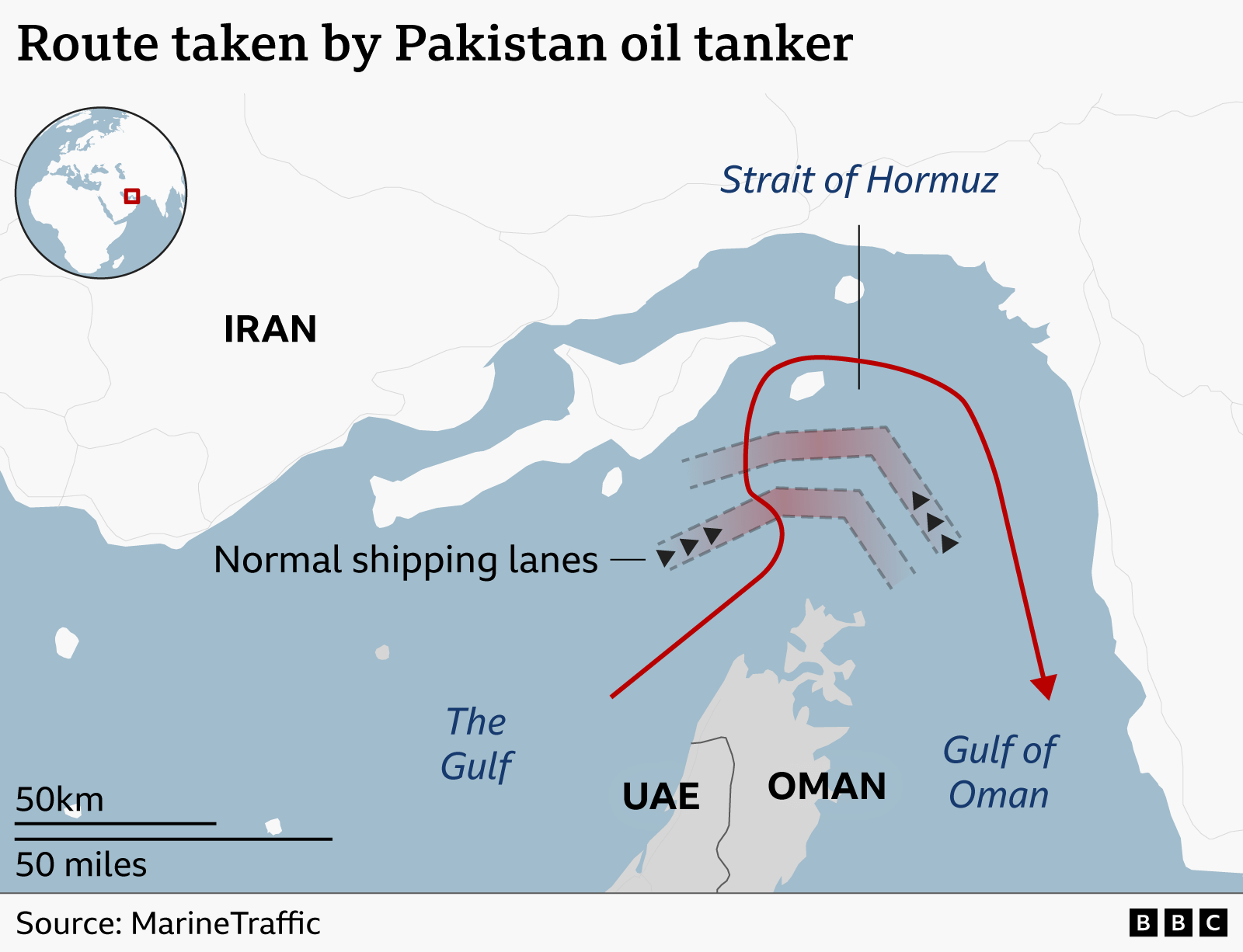
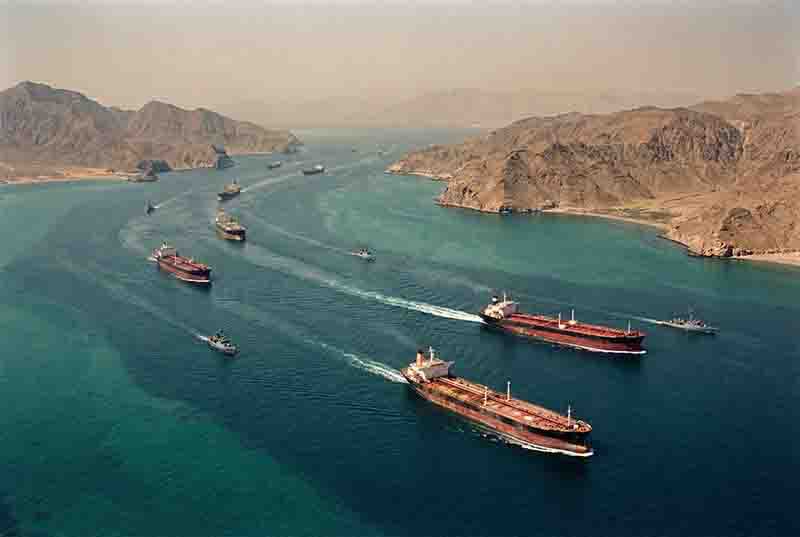
The Strait of Hormuz is a narrow choke point between Iran and the Arabian Peninsula. A large share of the world’s seaborne oil has historically passed through it, along with cargoes that become fuel, plastics, and agricultural chemicals. When commercial traffic falls sharply, the first victims are not always American drivers. They are import-dependent countries that buy energy and fertilizer and then sell food. Those secondary effects travel. They become higher prices in one hemisphere, delayed cargo in another, and, eventually, thinner margins for a firm in Ohio that cannot pass every cost to customers who are already stretched.
This lag is what makes the moment politically treacherous. Officials can point to a quiet week in the news and declare the emergency contained. In logistics, the opposite is often true. The worst phase is the phase after the cameras leave and the inventories run out. Things that are out of sight are not therefore far away.
Two domestic amplifiers sit under the shipping problem. The first is inflation—the dishonest way a government keeps promises it can no longer fund in real goods. The second is productivity. A drop on the order of a fifth to a third of output is not a rounding error. It is the kind of shock that destroys the tax base, the real wage, and the public’s remaining patience. Every promise made in the previous decade—pensions, defense, health care, debt service—becomes harder to keep. Credit then becomes the substitute for production, until creditors themselves flinch.
Banking liquidity is the quiet floor under both problems. Credit can vanish faster than a legislature can hold a hearing. Liquidity crises do not announce themselves as ideology. They announce themselves as frozen payrolls, halted inventory financing, and a sudden discovery that the numbers on a screen were always a confidence game with rules. After eighty years in which the American system, however ugly its panics, was always restabilized, it is easy to treat restabilization as a law of nature. It is not. It is a political act. It requires a state that still has credibility with lenders and a population that still accepts the distribution of pain. Both are weaker than the monuments suggest.
Empires That Looked Like Geology
To understand how fast “permanent” can end, it helps to remember 1917 and 1918. The Ottoman, Romanov, Hohenzollern, and Habsburg systems had lasted for centuries. They had general staffs, state churches, palaces, and the appearance of geology. In roughly fifteen months of military defeat, hunger, and political fracture, they ceased to exist as ruling orders. The map of Europe and the Near East was rewritten. Millions discovered that the institutions they had been born into were arrangements. Arrangements can end.
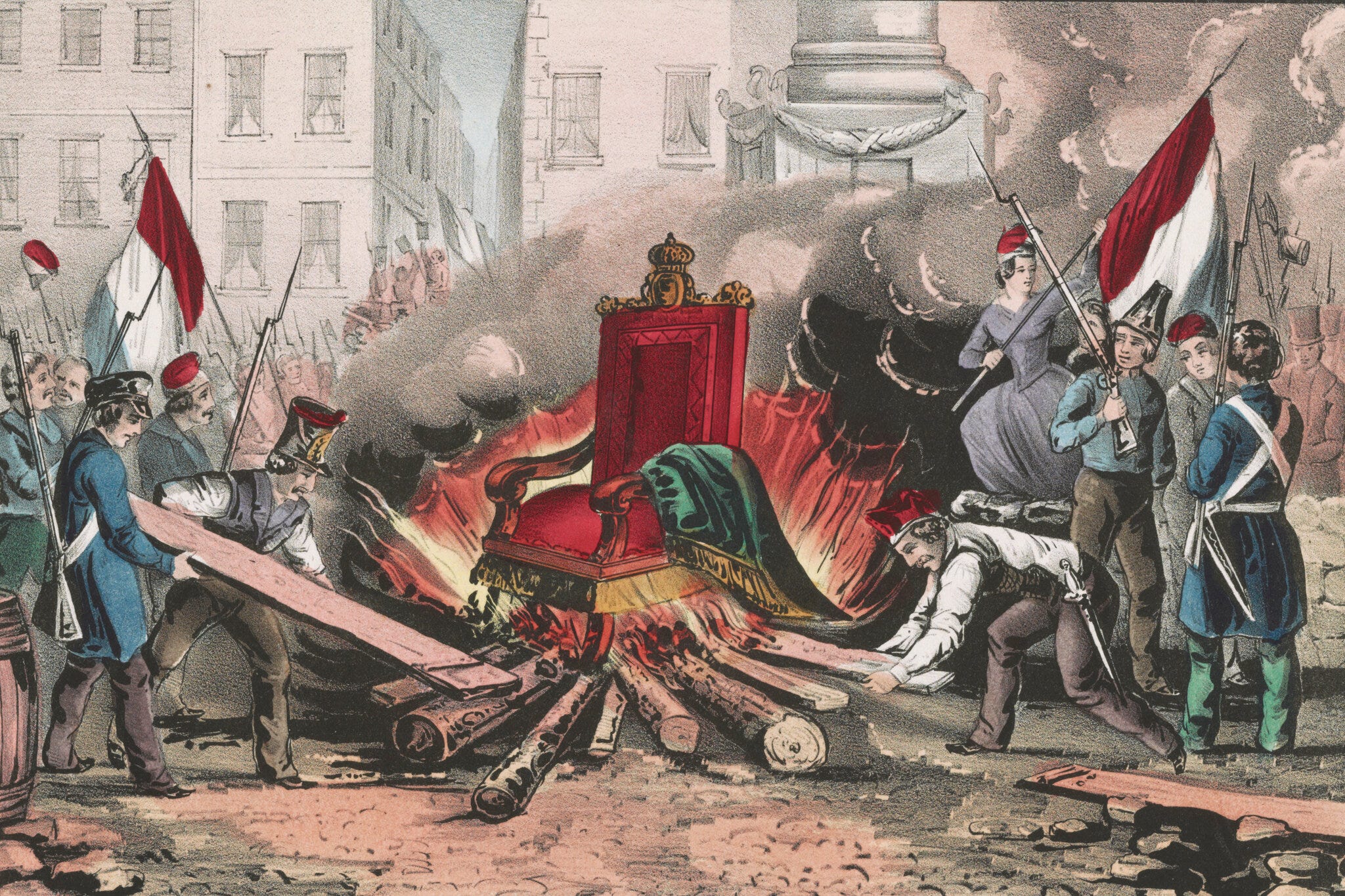
The United States is not a multinational land empire on the brink of losing a world war. The analogy is psychological, not cartographic. People who have known continuity since 1945 find it nearly impossible to imagine that the order around them could become unrecognizable in a few months. Incomprehensible is not the same as impossible. Supply chains, credit, and political consent are thinner than marble buildings.
The continental United States has not experienced famine, foreign occupation, currency wipeout, or mass political violence on a nineteenth-century European scale in the living memory of most citizens. That is a genuine achievement. It is also a training regimen. It teaches people to treat continuity as the default setting of history. History’s default is discontinuity. The useful question is not whether collapse is certain. It is whether the public’s mental model of time is still calibrated to a world of intact shipping lanes and unquestioned institutions.
What a Presidency Is For
If the domestic system is this brittle, the first question of statecraft is not which foreign capital can be punished. It is what happens inside the United States and what happens to the global financial and energy system on which American households still depend. Prestige projects that do not answer those questions are not strategy. They are consumption of scarce political capital.
That is the indictment of recent Middle East policy. Washington has behaved as if the central task were to deliver a battlefield outcome for Israel, to attempt the destruction or paralysis of Iran, or to seize lasting control of the Strait of Hormuz. Those aims may satisfy particular allied governments. They do not automatically stabilize American grocery prices, restore tanker traffic, or rebuild the legitimacy of institutions at home. In some cases they do the opposite: they raise risk premia, interrupt cargo, and convince much of the world that the United States is the author of the chaos rather than the manager of last resort.
The charge that American power has become the enabler of operations in Gaza and southern Lebanon is now common far beyond the region. So is the charge that a “Greater Israel” vision—maps that swallow large parts of neighboring territory—has been allowed to set the horizon of U.S. policy. Whether one accepts the harshest moral language used by critics, the strategic problem is straightforward. If ruling elites across the Middle East conclude that Washington is not a broker but a combatant for one local project, they will not help reopen waterways, restrain militias, or share the costs of de-escalation. The United States then inherits the blame for a crisis it cannot militarily finish.
Peace, in this frame, is not sentiment. It is the only condition under which shipping insurance falls, fertilizer moves, and the Treasury is not asked to fund a war and a social crisis at the same time. A country already close to a legitimacy shock cannot afford to be a pariah in the same season its supply chains kink.
Strikes Are Not a Strategy
The military facts sit behind the political ones. Air and naval strikes can produce temporary paralysis. After the explosions, someone has to take the ground, hold the roads, police the cities, and prevent the enemy from walking back in. That is the work of a large army with staying power. It is not the work of a force that has been described, without much exaggeration, as a gesture when set beside peer land armies. A U.S. Army on the order of 450,000 soldiers is a serious instrument for deterrence, limited campaigns, and the defense of the homeland. It is not an occupation army for a large Middle Eastern war against a prepared continental opponent.
The Iraq occupation remains the ghost at the table. It showed the cost of staying and the cost of leaving. The lesson that should have been learned is that Washington cannot casually repeat the invasion phase while pretending the occupation phase is optional and the casualty phase will be brief. Precision weapons do not repeal terrain. Missiles, drones, and home ground favor the defender. An old naval proverb applies on land as well: a ship is a fool to fight a fort. Projecting power against a prepared opponent from a distance is not the same as commanding the outcome.
The absence of strategy makes this worse. Without a strategy, everything appears possible—regime change, strait seizure, permanent regional supremacy, painless withdrawal, painless victory. With a strategy, most of those goals are revealed as unattainable at acceptable cost. The professional question is not what would look impressive on a briefing slide. It is what the force on hand can hold after the first night of explosions.
Civilian leaders often delay exits not because the war is winnable, but because leaving is an admission. Face-saving escalation is the most expensive habit in American statecraft. The alternative is unfashionable and adult: accept the limit, stop spending blood and credit on an unfinishable project, and use whatever political capital remains on the home system that actually decides whether the government survives.
The Garrison Habit
The deeper pattern is older than any single administration. The United States was blessed by geography. Oceans made it possible to avoid other people’s wars. Then Washington discovered it could influence outcomes with money, bases, and credit. The discovery became a habit. The habit became a global archipelago of facilities that must be defended, supplied, and explained long after the original purpose has faded.
Britain’s departure from India is the cold comparison. The Raj was the centerpiece of imperial identity. Leaving it was a confession of exhaustion and a recognition that the costs had overtaken the benefits. A similar confession is now due from a country that still talks as if primacy were a birthright rather than a bill. Denial is more dangerous than adjustment. Adjustment at least leaves a republic standing.
The plausible future is not a tidy, planned drawdown announced from a rose garden. It is expulsion and attrition: pressure against American positions in Korea, Japan, Germany, and Italy; no return to the Persian Gulf on the old terms; host nations deciding that the protection is no longer worth the risk of becoming a target. Whether that happens through local politics, budget crisis, or military pressure, the destination is the same. The overseas footprint shrinks because the United States can no longer underwrite the old order and fight new wars and stabilize a strained society at the same time.
This is the least sentimental part of the argument. For eighty years, American identity has been bound up with being the security manager of last resort. Giving that up feels like giving up the country. The reply is that the country is the people, the currency, the food system, and the domestic peace—not the map of bases.
The Center of Gravity Moves East
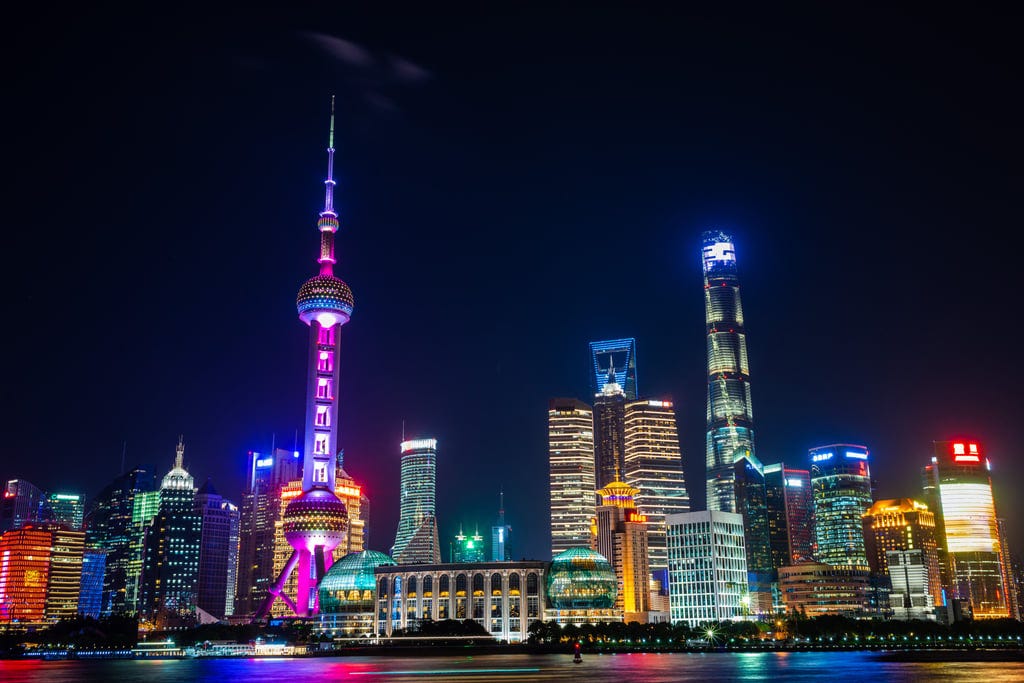
While Washington remains entangled in the Near East, the center of wealth and industrial gravity continues to move. For centuries before 1492, the great concentrations of technique and surplus were in Asia. The European seizure of the Americas reversed the flow. That reversal is now reversing again. Manufacturing, infrastructure, scale, and in many fields technological capacity have clustered in the East. China is the engine of much of the world’s material prosperity. Capital and supply chains are magnetized toward it whether Western speeches approve or not.
The simple story that China is a new conquest state looking for continents to administer does not fit the record as cleanly as hawks would like. Beijing’s last major attempt at a large invasion, in Vietnam, ended badly. Chinese statecraft is often civilizational and commercial: the claim to be the center, not the claim to be a crusade. That does not make the government gentle. It does change the implied American response.
If the threat is a landing on the Pacific coast, the answer is the Navy and the nuclear deterrent. If the reality is that factories, processing, shipping finance, and industrial ecosystems now cluster in East Asia, the answer is a different productive base at home and a less theological foreign policy abroad. Treating every commercial shift as an existential invasion is a way to fight the wrong war with the wrong tools while the right problems—energy, food, credit, legitimacy—ripen unattended.
There is an opportunity buried in the shift. A United States that stops defining itself as the blocker of every other center of gravity can look for a non-hostile coexistence and recover the freedom to reconstruct its own industry. A United States that insists on primacy in every theater will discover that primacy is invoiced in dollars, ships, and public patience it no longer has in surplus.
What Preparation Actually Is
“Prepare for the blast” is easy to cheapen into survivalist theater. The serious version is civic. If a combined shock of prices, shortages, and institutional distrust arrives, the people who currently occupy official buildings will not have a ready answer. They do not have a ready answer now. The question then becomes how communities, firms, and households organize themselves when the familiar intermediaries fail.
Preparation in that sense is not a single product and not a call to treat fellow citizens as the enemy. It is the recognition that food, fuel, and employment are the real constitution of a modern society. It is skepticism toward any policy that treats the Gulf as a stage for prestige while the domestic price system is left to absorb the blast on delay. It is an insistence that military means must match political ends. It is a willingness to look at 1848 and 1918 not as costume dramas but as reminders that order is perishable.
None of this requires a conspiracy theory. It requires arithmetic. Lost legitimacy plus concentrated spending power plus a delayed energy and food shock plus an army too small for the wars being discussed is a recipe. Recipes do not always get cooked. When they do, they do not wait for a convenient election calendar.
The United States has spent a lifetime assuming that the next crisis would be managed the way the last ones were: with credit, with a press conference, with a surge of force somewhere else. Those tools still exist on paper. They are weaker in fact. If the blast comes, it will not look like a foreign army on the beaches. It will look like the week ordinary people discover that the stores, the banks, and the institutions they were told were permanent were only as solid as the next shipment and the next paycheck.
That is a darker picture than official rhetoric allows. It is also the picture that appears when one stops counting enemy capitals captured and starts counting the days of food, fuel, and consent a society has left. Whether the country uses the warning as panic or as a reason to change course is the only part of the story still unwritten. The ingredients are visible. The lag is not infinite. The institutions that would have to manage the shock are the same institutions large parts of the public have already stopped believing. That is the blast. Everything else is commentary.


